Macronutrients Guide
Proteins, carbohydrates, fats, fiber: understand their role and optimize your diet to reach your health goals.
 Nutrition
Everything you need to know about macronutrients
What are macronutrients?
Macronutrients are the nutrients our body needs in large quantities to function properly. They form the foundation of any diet and provide the energy required for all our daily activities, from breathing and thinking to exercising and recovering.
There are three main families: proteins (4 kcal per gram), carbohydrates (4 kcal per gram), and fats (9 kcal per gram). Alongside them, dietary fiber holds a special place: it provides little direct energy, but plays a crucial role in digestive, metabolic, and cardiovascular health.
Understanding these nutrients is the first step toward making better food choices, and knowing why they matter.
Proteins
Proteins are often described as the building blocks of the human body, and for good reason. They are involved in tissue growth and repair, enzyme production, and hormone synthesis. Without adequate protein intake, the body starts breaking down its own muscle to meet its needs, something we want to avoid.
In terms of quantity, needs vary depending on lifestyle. A sedentary person needs roughly 0.8 g per kilogram of body weight per day, while an active person typically requires 1.2 to 1.6 g/kg. For intense athletes or those in a muscle-building phase, this can rise to 2 g/kg.
The best sources are also the most varied. On the animal side: meat, fish, eggs, and dairy products. On the plant-based side: legumes, tofu, tempeh, quinoa, and nuts are excellent options. The goal is to prioritize complete proteins, those containing all 9 essential amino acids, or to combine complementary plant sources to achieve the same result.
Carbohydrates
Carbohydrates are the body's primary energy source, especially for the brain and muscles during sustained effort. They provide 4 kcal per gram and should ideally represent 45 to 55% of total daily caloric intake.
But not all carbohydrates are equal. Simple carbohydrates, sugars, candy, sodas, fruit juices, are absorbed very quickly, causing a blood sugar spike followed by an energy crash. These are best consumed in moderation. Complex carbohydrates, on the other hand, whole grains, legumes, vegetables, whole fruits, digest slowly, providing steady energy over time and better satiety.
In practice, cutting back on refined carbohydrates and favoring naturally fiber-rich sources helps stabilize blood sugar and keeps those mid-morning hunger pangs at bay.
Fats
Fats are often unfairly demonized, but they are genuinely essential. They participate in hormone production, enable the absorption of fat-soluble vitamins (A, D, E, K), protect our organs, and form the membrane of every single cell. At 9 kcal per gram, they are energy-dense, and should represent around 35 to 40% of total caloric intake.
The critical distinction is between types of fat. Unsaturated fats, olive oil, avocado, nuts, seeds, and fatty fish like salmon or mackerel, have well-documented benefits for cardiovascular health and inflammation. Saturated fats (butter, cheese, fatty meats) should be moderated, ideally kept below 10% of total calories. As for trans fats, found in ultra-processed products and hydrogenated margarines, they should be avoided as much as possible due to their impact on cardiovascular risk.
Dietary Fiber
Dietary fiber is technically not an energy macronutrient. Yet its role in the body is fundamental: it feeds the gut microbiome, slows sugar absorption, helps reduce cholesterol levels, and meaningfully improves satiety. The recommended intake is 25 to 30 g per day, a target many people don't consistently meet.
There are two main types. Soluble fiber, found in oats, legumes, apples, and psyllium, dissolves in water and forms a gel that slows digestion and stabilizes blood sugar. Insoluble fiber, present in whole grains, wheat bran, and green vegetables, speeds up intestinal transit and contributes to fullness.
Increasing fiber intake doesn't require drastic changes: swapping refined grains for whole grains, adding vegetables to every meal, and regularly including legumes in your diet are often enough to make a real difference.
Balancing your macros
There is no single universally ideal macro ratio. The right balance depends on your goals, activity level, and dietary preferences. As a reference point, a standard balanced diet typically looks like 50% carbs, 25% protein, and 25% fat.
This ratio can be adjusted based on needs. For muscle gain, increasing protein to around 35% and reducing carbs to 40% supports muscle synthesis. For weight loss, a more even split, 40% carbs, 30% protein, 30% fat, can help control hunger without sacrificing energy. A low-carb approach reduces carbs to around 20%, with 30% protein and 50% fat.
To calculate your precise caloric needs before splitting your macros, use our calorie calculator.
Macros and intermittent fasting
Intermittent fasting doesn't prescribe a specific macro ratio, but certain principles help optimize results and make the most of both approaches combined.
During the eating window, the focus should be on adequate protein to preserve muscle mass, the risk of muscle breakdown is real during extended fasting periods. Complex carbohydrates and fiber provide lasting satiety, which is especially important when meals are concentrated within a few hours. Quality fats support hormone production and sustained energy throughout the day.
When breaking the fast, start with a moderate meal combining protein and complex carbs rather than trying to compensate for accumulated hunger all at once. Simple sugars consumed alone cause a significant blood sugar spike followed by an energy crash, the opposite of what you're after. Pairing macro tracking with a fasting protocol (16:8, 5:2) can meaningfully improve body composition and insulin sensitivity.
Disclaimer
The information presented in this guide is provided for educational and informational purposes only. It does not constitute personalized medical or nutritional advice.
Nutritional needs vary based on many factors: age, sex, health status, activity level, and any existing medical conditions.
Consult a healthcare professional (doctor, registered dietitian) before making significant changes to your diet, especially if you have a chronic illness, an eating disorder, or are pregnant.
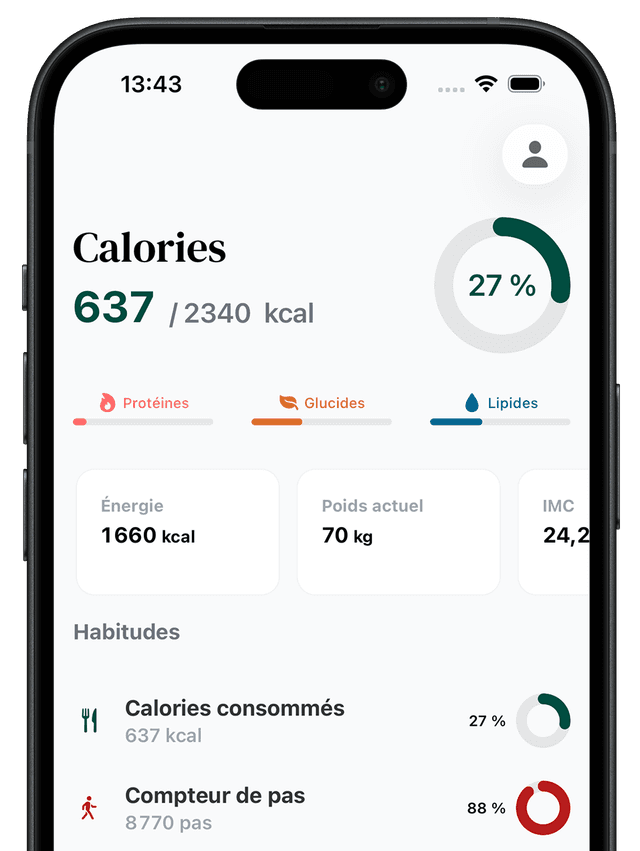
Track your macros easily with Ember
Ember's AI analyzes your meals and automatically calculates your protein, carb, and fat intake. Simply describe what you eat.
You might also like
View all articlesEssential micronutrients
Vitamins, minerals, trace elements: discover why these nutrients are vital to your health.
NutritionGlycemic index: how does it work?
Understand GI, what affects it, and how to use it in daily choices.
Weight & fitnessCaloric deficit explained
Understand how to create a healthy, sustainable caloric deficit to lose weight without frustration.