Caloric Deficit
Understand the caloric deficit principle, learn how to calculate it, and take a healthy, sustainable approach to reaching your weight loss goals.
 Poids
PoidsEverything you need to know about caloric deficit
What is a caloric deficit?
A caloric deficit occurs when you consume fewer calories than your body expends. This is the fundamental principle that drives fat loss.
Your body requires a certain amount of energy each day to function: this is your TDEE (Total Daily Energy Expenditure). When your caloric intake is lower than your TDEE, your body draws on its energy reserves, primarily fat, to make up the difference. If you eat exactly as much as you expend, your weight stays stable. And if you exceed your TDEE, the surplus is stored, mostly as fat. Everything comes down to this simple balance between what you eat and what you burn.
How to calculate your caloric deficit?
To calculate your caloric deficit, you first need to estimate your TDEE in three steps.
The first step is calculating your BMR (Basal Metabolic Rate), the energy your body uses at rest. The current gold standard is the Mifflin-St Jeor formula: Men: BMR = (10 × weight in kg) + (6.25 × height in cm) − (5 × age) + 5; Women: BMR = (10 × weight in kg) + (6.25 × height in cm) − (5 × age) − 161.
Next, this BMR is multiplied by an activity factor that reflects your lifestyle: 1.2 if you are sedentary (little or no exercise), 1.375 if you are lightly active (1–3 days per week), 1.55 for moderate activity (3–5 days per week), and 1.725 if you train 6–7 days a week. The result is your TDEE.
Finally, to set your deficit, simply subtract 300 to 500 kcal from your TDEE. That's your daily calorie target for gradual, controlled weight loss.
Caloric deficit and weight loss
The relationship between caloric deficit and weight loss is well established by science: 1 kg of body fat is equivalent to approximately 7,700 kcal. To lose that kilogram, you need to create a cumulative deficit of that magnitude over time. In practice, a 500 kcal/day deficit leads to roughly 0.5 kg lost per week, while a 1,000 kcal/day deficit can result in about 1 kg per week. A rate of 0.5 to 1 kg per week is generally considered healthy and sustainable.
That said, actual weight loss may vary due to water retention, muscle mass, hormonal cycles, and metabolic adaptation. The number on the scale does not always reflect actual fat loss.
What deficit should you aim for?
The ideal deficit depends on your profile and goals. For most people, a moderate deficit of 300 to 500 kcal per day is the best starting point: weight loss is gradual, muscle mass is better preserved, and side effects like fatigue remain limited. It's the most sustainable approach over time.
A larger deficit of 500 to 1,000 kcal per day can work for people with significant excess weight, but it requires careful attention to protein intake to prevent muscle loss.
Beyond 1,000 kcal of daily deficit, the risks clearly outweigh the benefits. A severe deficit slows your metabolism, promotes nutritional deficiencies, causes significant muscle loss, and leads to chronic fatigue and mood disorders, not to mention the yo-yo effect that follows once you stop. This level of restriction simply isn't viable long-term.
Balancing macronutrients in a deficit
Being in a caloric deficit does not mean eating anything in smaller amounts. Nutritional quality remains essential, and certain macronutrients deserve particular attention.
Protein is the top priority: maintaining an intake of 1.6 to 2 g per kg of body weight preserves muscle mass during restriction, increases satiety, and boosts the thermic effect of food. Next, fiber, aim for 25 to 30 g per day through vegetables, legumes, whole grains, and fruits, promotes satiety and helps regulate blood sugar. For fats, don't drop below 0.8 g per kg of body weight: they are essential for hormone production and fat-soluble vitamin absorption. As for carbohydrates, adjust the quantity to your activity level and favor complex sources with a low glycemic index for steady, lasting energy.
Common mistakes
Several frequent pitfalls can slow your progress or harm your health. The most common is underestimating calorie intake: dressings, oils, and caloric beverages are often overlooked. Weighing your food, at least at first, significantly improves accuracy.
Neglecting protein is another classic mistake: insufficient intake promotes muscle loss rather than fat loss, as your body may break down muscle to compensate for the energy shortage. Along the same lines, creating too aggressive a deficit pushes the body to adapt by lowering its metabolism, the well-known metabolic adaptation, and leads to intense hunger that results in dietary slips and discouragement.
Lack of sleep is often underestimated: it increases ghrelin (the hunger hormone), reduces leptin (the satiety hormone), and promotes muscle loss rather than fat loss. Finally, ignoring refeed cycles is a long-term mistake: incorporating refeed days, maintenance-calorie days, helps keep your metabolism active and makes the whole approach more sustainable.
Caloric deficit and intermittent fasting
Intermittent fasting is an effective strategy for naturally achieving a caloric deficit without obsessively counting every calorie. By restricting the eating window, it mechanically reduces opportunities to eat, and appetite tends to decrease naturally over time. The low insulin levels characteristic of fasting periods also promote lipolysis, using fat as fuel.
The synergy between fasting and a conscious deficit is real: combining a reduced eating window, like the 16:8 protocol, with a targeted calorie goal maximizes results. During the eating window, choosing filling, nutrient-dense foods helps sustain the deficit without excessive hunger. The key is simply not to break your fast with a high-calorie meal that offsets the entire accumulated deficit, and to maintain adequate protein intake throughout the eating window.
Disclaimer
The information presented in this guide is provided for educational and informational purposes only. It does not constitute personalized medical or nutritional advice.
Caloric needs and responses to dietary restriction vary based on many factors: age, sex, health status, activity level, and medical history.
Consult a healthcare professional (doctor, registered dietitian) before starting a restrictive diet, especially if you have a chronic illness, an eating disorder, or are pregnant.
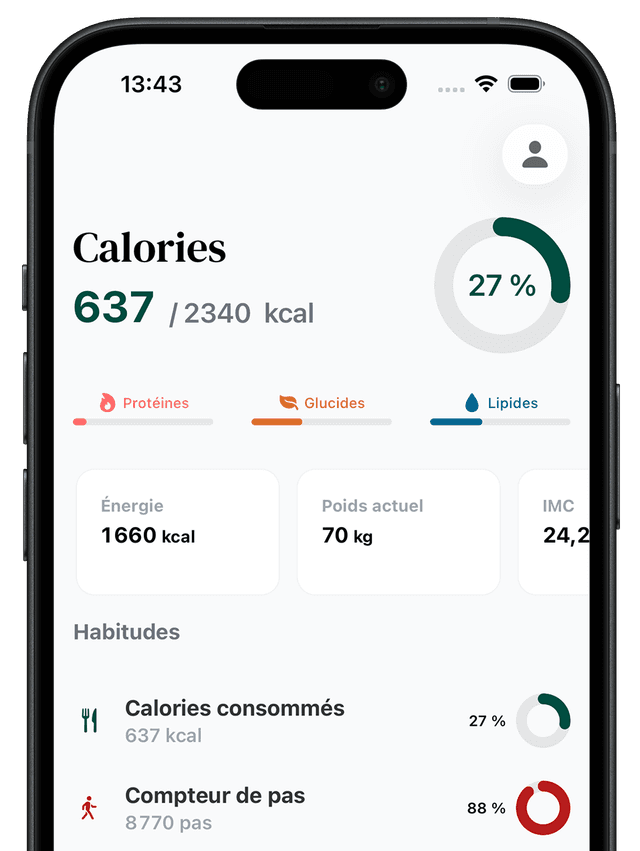
Track your caloric deficit with Ember
Ember's AI analyzes your meals and automatically calculates your caloric intake. Pair it with your TDEE to manage your deficit day by day.